
Macro-economy · Explainer
Why Thailand's inflation held lower than forecast in Q1 2025
Core inflation at 0.8 percent raised questions about demand, energy pricing, and the central bank's next move.
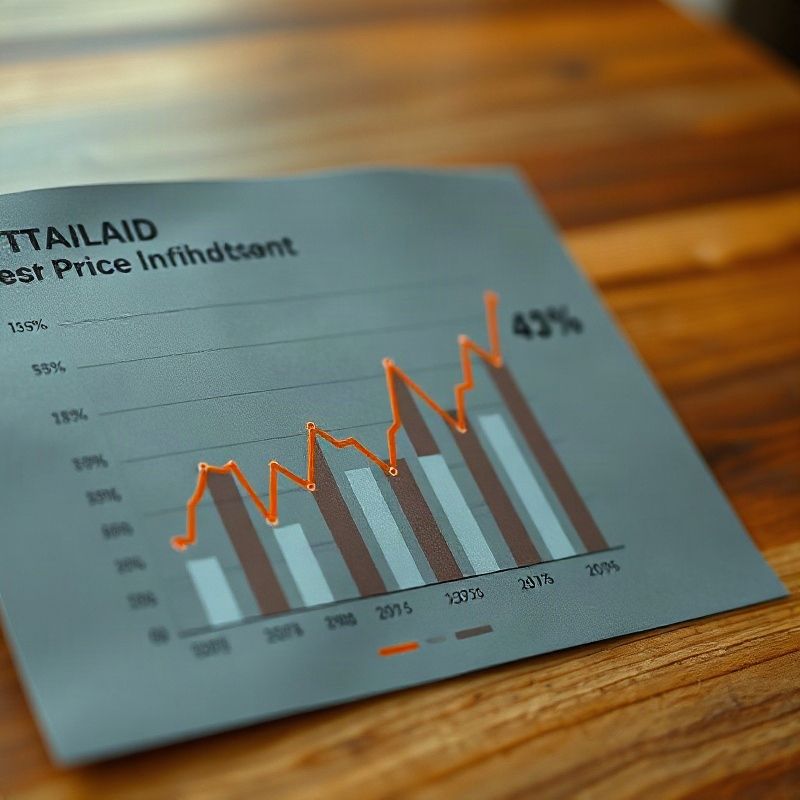
Thailand's headline consumer price index rose by just 0.6 percent year-on-year in the first quarter of 2025, while core inflation — which strips out raw food and energy — landed at 0.8 percent. Both figures fell short of the Bank of Thailand's midpoint target of 1.5 percent, extending a period of below-target inflation that began in mid-2024. The Commerce Ministry's data showed that the largest drag came from three categories: fresh vegetables (down 4.2 percent), domestic fuel (down 2.9 percent following the government's energy-relief extension), and clothing and footwear (down 1.1 percent). Together, these three sub-indices subtracted roughly 0.7 percentage points from the headline reading. On the upside, healthcare and education costs continued to push in the opposite direction, rising 2.4 and 3.1 percent respectively — a pattern consistent with structural cost pressures that monetary policy alone cannot easily address. The below-target inflation reading complicates the Bank of Thailand's communication task. The Monetary Policy Committee held its benchmark rate at 2.50 percent at its February 2025 meeting, citing the need to preserve policy space amid global uncertainty. With inflation persistently soft, several external analysts have begun pencilling in a rate cut in the second half of the year, though the MPC has not signalled this direction. For households in the northeast — where fresh-food consumption as a share of the monthly budget is higher than the Bangkok average — the vegetable-price decline offered modest but tangible relief. Vendors in Khon Kaen's Ton Tann market reported quieter negotiations with wholesale suppliers compared with the same period in 2024, a ground-level echo of the statistics. The picture is not uniformly comfortable. Sticky services inflation, driven by education and healthcare, means that lower-income households face a very different effective inflation rate than the headline figure suggests.